
IT Asset Lifecycle Management: ITSM Best Practices for Modern Organizations

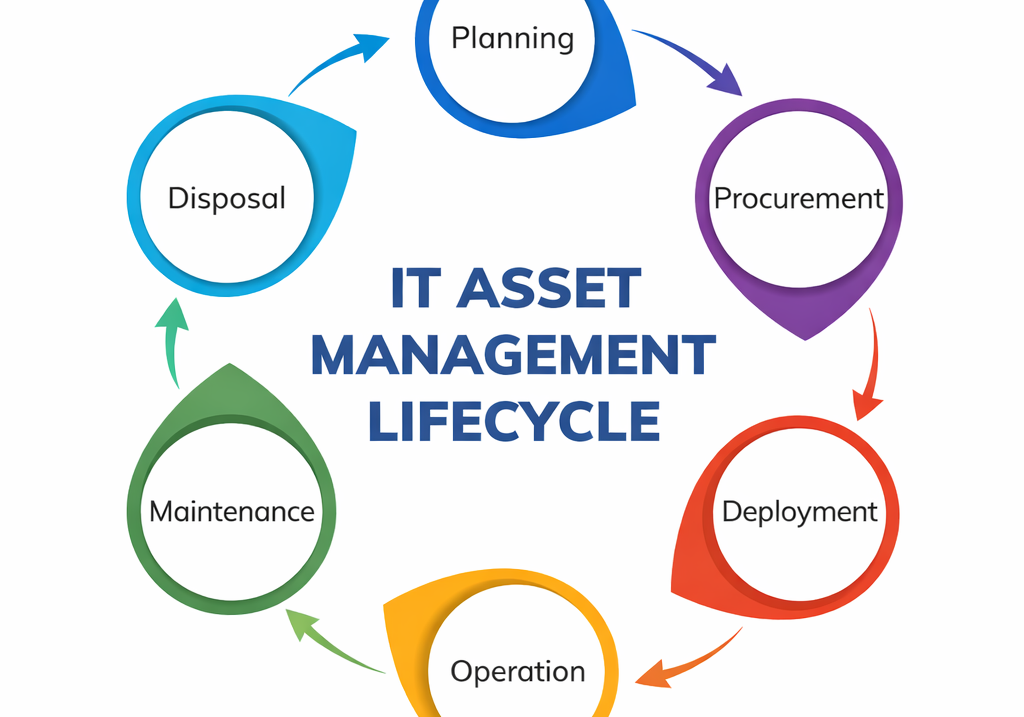
IT assets are essential for operational reliability, security, and scalability in most organizations. Laptops, servers, network devices, software licenses, cloud subscriptions, and specialized equipment all have a lifecycle, managed or not. Effective IT Asset Lifecycle Management (ITALM), guided by IT Service Management (ITSM) best practices, ensures control and prevents disorder.
This article explains the IT asset lifecycle, its alignment with ITSM, and best practices proven in growing enterprises, manufacturing, healthcare, and distributed IT environments. We also show how SoftwarePac supports these practices efficiently and without unnecessary bureaucracy.
What Is IT Asset Lifecycle Management?
IT Asset Lifecycle Management is a structured approach to managing assets from planning and procurement through deployment, operation, maintenance, and retirement. Unlike basic asset tracking, it focuses on optimizing value, reducing risk, and ensuring service continuity.
From an ITSM perspective, assets are more than inventory. They enable configurations that directly impact incident management, change management, security, and cost control.
Weak lifecycle management leads to:
- Surprise outages caused by aging hardware
- Compliance failures from unmanaged licenses
- Security gaps due to unknown or unpatched assets
- Financial waste from unused or duplicated resources
Strong lifecycle discipline prevents these issues before they occur.
The Six Phases of the IT Asset Lifecycle
1. Planning and Demand Management
Lifecycle management starts before any purchase. This phase aligns business requirements with IT capabilities.
Best practices
- Define asset standards (approved laptop models, switches, OS versions, software editions)
- Forecast demand using headcount growth, project plans, and refresh cycles.
- Link asset planning with budgeting and capacity planning
- Avoid one-off purchases that create long-term support burdens.
Organizations using SoftwarePac centralize asset standards and planning assumptions to ensure consistent procurement decisions across sites and departments.
2. Procurement and Acquisition
Procurement requires financial discipline and lifecycle control. Buying low-cost assets without lifecycle visibility often results in higher long-term costs.
Best practices
- Record vendor details, warranties, SLAs, and support contracts at purchase time
- Assign ownership (department, cost center, responsible role)
- Capture software license metrics and entitlements.
- Avoid shadow IT purchases outside approved workflows.
In mature ITSM environments, procurement data is entered directly into the asset repository instead of being stored in spreadsheets or email threads.
3. Deployment and Onboarding
Deployment moves assets from inventory into service. This phase is critical because it establishes traceability for the entire lifecycle.
Best practices
- Assign assets to users, locations, or systems at deployment.
- Record baseline configuration and installed software
- Tag assets physically (e.g., barcode or QR code) and digitally.
- Integrate asset records with service desk workflows.
With SoftwarePac, deployment records are immediately linked to users and locations, enabling faster incident resolution later because support teams know precisely what hardware or software is involved.
4. Operation and Utilization
This is the longest and often most neglected phase of the lifecycle. Many organizations track assets at purchase and disposal but lose visibility during daily operations.
Best practices
- Monitor asset health, usage, and performance indicators.
- Track incidents and problems against specific assets
- Identify underutilized or idle assets.
- Maintain visibility across remote, branch, and plant locations.
From an ITSM perspective, operational data is invaluable. If incidents increase for a specific model or software version, lifecycle data helps identify patterns before they cause outages.
5. Maintenance, Support, and Optimization
Maintenance is the stage where lifecycle management directly reduces downtime and costs. Preventive actions are more effective than reactive responses.
Best practices
- Schedule maintenance based on warranty and lifecycle stage
- Track repairs, replacements, and part history
- Monitor contract expirations and renewal windows.
- Plan refresh cycles before failure risk increases
SoftwarePac provides maintenance reminders and service history, enabling IT teams to base refresh decisions on data rather than intuition.
End-of-life does not remove responsibility. Improper disposal can create security, compliance, and audit risks.
Best practices
- Securely wipe or destroy data before disposal.
- Track decommissioned assets for audit purposes
- Recover licenses and reassign where permitted.
- Analyze lifecycle cost to improve future planning.
A well-managed retirement process completes the lifecycle and incorporates lessons learned into future planning. This approach makes lifecycle management a process of continuous improvement.
ITSM Best Practices That Strengthen Asset Lifecycle Management
Treat Assets as Service Enablers, Not Inventory
In ITSM, assets exist to deliver services. Asset data must support incident, problem, change, and request management, not remain isolated.
Single Source of Truth
Fragmented tools create blind spots. A centralized asset platform such as SoftwarePac prevents discrepancies among procurement, service desk, and finance functions.
Automate Where It Matters
Automation should simplify processes, not add complexity. Automated assignments, reminders, and status updates help maintain accurate lifecycle data without manual intervention.
Align ITAM with Security and Compliance
Unknown assets are often unpatched assets. Lifecycle management must integrate with security controls, audits, and policy enforcement.
Measure Lifecycle KPIs
Track metrics such as:
- Asset utilization rate
- Mean time between failures
- Cost per asset over lifecycle
- Incident volume by asset type
These metrics elevate asset management from basic record-keeping to informed decision-making.
Why IT Asset Lifecycle Management Is Critical for Content-Driven IT Organizations
Modern IT teams must justify decisions to leadership with precise data. Lifecycle management provides this foundation.
- Why refresh cycles matter
- Where money is being wasted
- How is risk being reduced?
- Why certain standards exist
For organizations in manufacturing, healthcare, or distributed enterprises, lifecycle discipline is essential for operational continuity. SoftwarePac is designed to support practical, ITSM-aligned asset lifecycle management without unnecessary complexity.
Final Thoughts
IT Asset Lifecycle Management is about control, accountability, and foresight, not just tools. When aligned with ITSM best practices, it becomes a strategic capability instead of an administrative task.
Organizations that invest in lifecycle maturity experience fewer outages, lower costs, stronger compliance, and improved service delivery. Those who do not often face increased downtime, audits, and loss of trust.
If your IT assets matter to your business, their lifecycle deserves the same discipline as your services.


 Feb 13, 2026
